








Most people can recall a time when they were flooded with emotion and reacted impulsively to something in the moment; it’s a common, albeit cringe-inducing part of the human experience. But one RULER tool—the Meta Moment—helps us to lean in with a different approach that can stop a reflexive reaction in its tracks.
As Windward continues its process of implementing the RULER approach to grow our emotional intelligence as a community, one focus is giving students concrete strategies to identify and manage strong emotions. In the spring issue of The Compass, we described the Mood Meter, a simple tool that helps build awareness of emotions in ourselves and others.
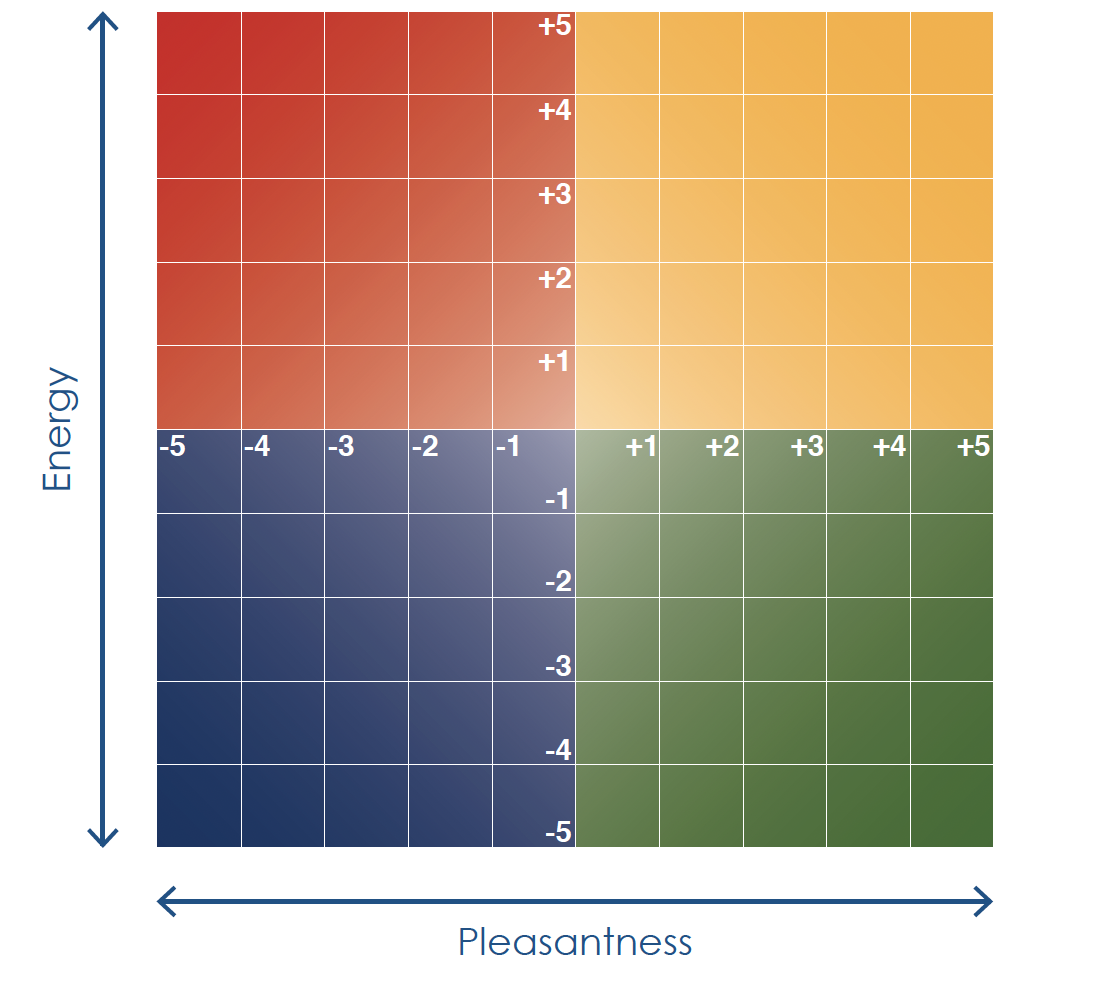
This article in the series on RULER will help unpack the Meta Moment, which is a series of steps that allows us to give ourselves space between an emotion triggered by an event and our response.
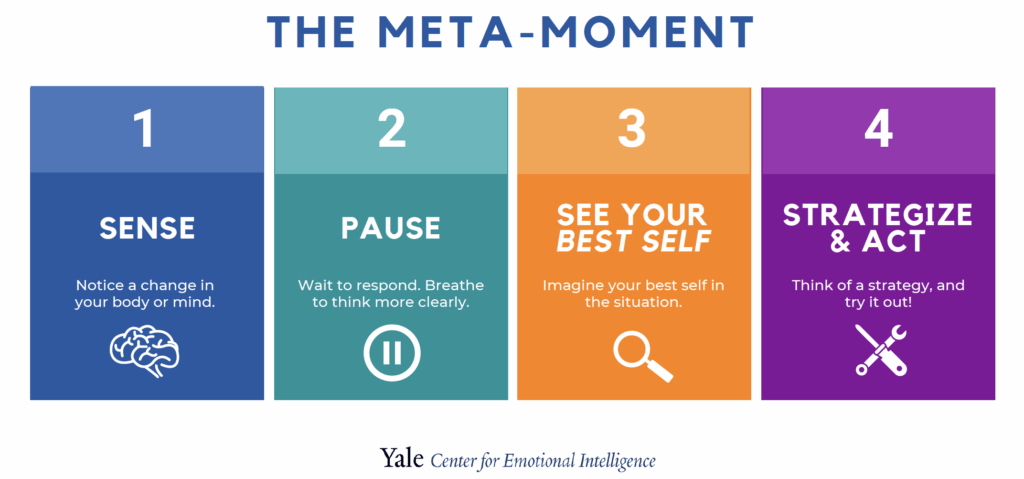
In the simplest terms, it’s an easy-to-understand routine, accessible to young children and adults alike, that helps us be intentional rather than impulsive in difficult moments. There are four steps involved in taking a Meta Moment, as shared by the Yale Center for Emotional Intelligence.
Sense
The first step is recognizing that something has happened in your environment, body, mind, or behavior.
Maybe you feel your heart start to race, your teeth clench, and your face flush after witnessing an injustice, prompting you to shift into the unpleasant, high energy (red) quadrant.
Or perhaps you are filled with excitement because you received great news, but you meet up with a friend who received not-so-great news, causing you to want to shift to a lower energy (blue or green) quadrant.
Pause
Step two is to take a moment to breathe deeply. “When we take a moment to breathe in more oxygen, the chemistry of our brains changes. When we breathe too shallowly or quickly, the biochemical effects of stress or excitement can shut down our ability to think clearly. By taking slow, deep breaths, we can relax our body and mind, activating our prefrontal cortex to feel calmer and problem-solve” (Yale Center for Emotional Intelligence).
See Your Best Self
Once several deep breaths have helped to calm your body and mind, you can envision your best self. How would the ideal version of you—the person you want to be and how you want others to see you—respond in this situation? Taking this moment to reflect redirects attention away from the emotional trigger and toward your values. Are these values centered around acting kindly to your fellow classmates as a member of the same community, or consistently making a positive impact on those around you? Having a list of values that you want to embody as your best self can be a helpful touchpoint during moments when emotions run high. Eventually, by repeatedly calling to mind your best self, you can actually train your brain to better regulate strong emotions that might otherwise derail you.
Strategize and Act
Step four is when you can choose an emotional regulation strategy that aligns with your best self. Depending on the situation, you may choose to use a thought strategy (such as positively reappraising or reframing the situation) or an action strategy (such as taking a walk or employing mindful breathing to de-escalate). Reappraisal could include positive self-talk, a form of being empathetic to ourselves. According to Mark Brackett, PhD, author of Permission to Feel, actively working on self-compassion triggers hormones affiliated with love such as oxytocin; by contrast, self-criticism “activates the sympathetic nervous system (fight/flight) and elevates stress hormones” (p. 152).
Windward students learn about tools like the Mood Meter and the Meta Moment in assemblies and their regularly scheduled SEL lessons. For example, in learning about the Meta Moment, they may create a list of qualities they associate with their best selves, which they can refer to anytime they need a reference point in navigating this new strategy.
By attuning themselves to their emotional landscapes, our community members can gradually build a framework for responding to challenging situations with grace and maturity. And that is the ultimate goal: modeling healthy and balanced behaviors to empower the children in our community to succeed in school and in life.
As we introduce this work, we have a meaningful opportunity to embed the Meta Moment into the fabric of everyday life, integrating it into our classroom routines and shared language. By encouraging students to pause before responding to a difficult moment, identify and name their emotions, or consider the kind of learner and friend they want to be, we’re helping them develop emotional habits that will serve them well beyond the classroom. As the adults of our community model this with intention, through our tone, body language, and words, we help students understand its purpose and power. In doing so, we foster a school culture rooted in empathy, reflection, and ongoing growth.
Danny Kass, Head of Westchester Lower School