



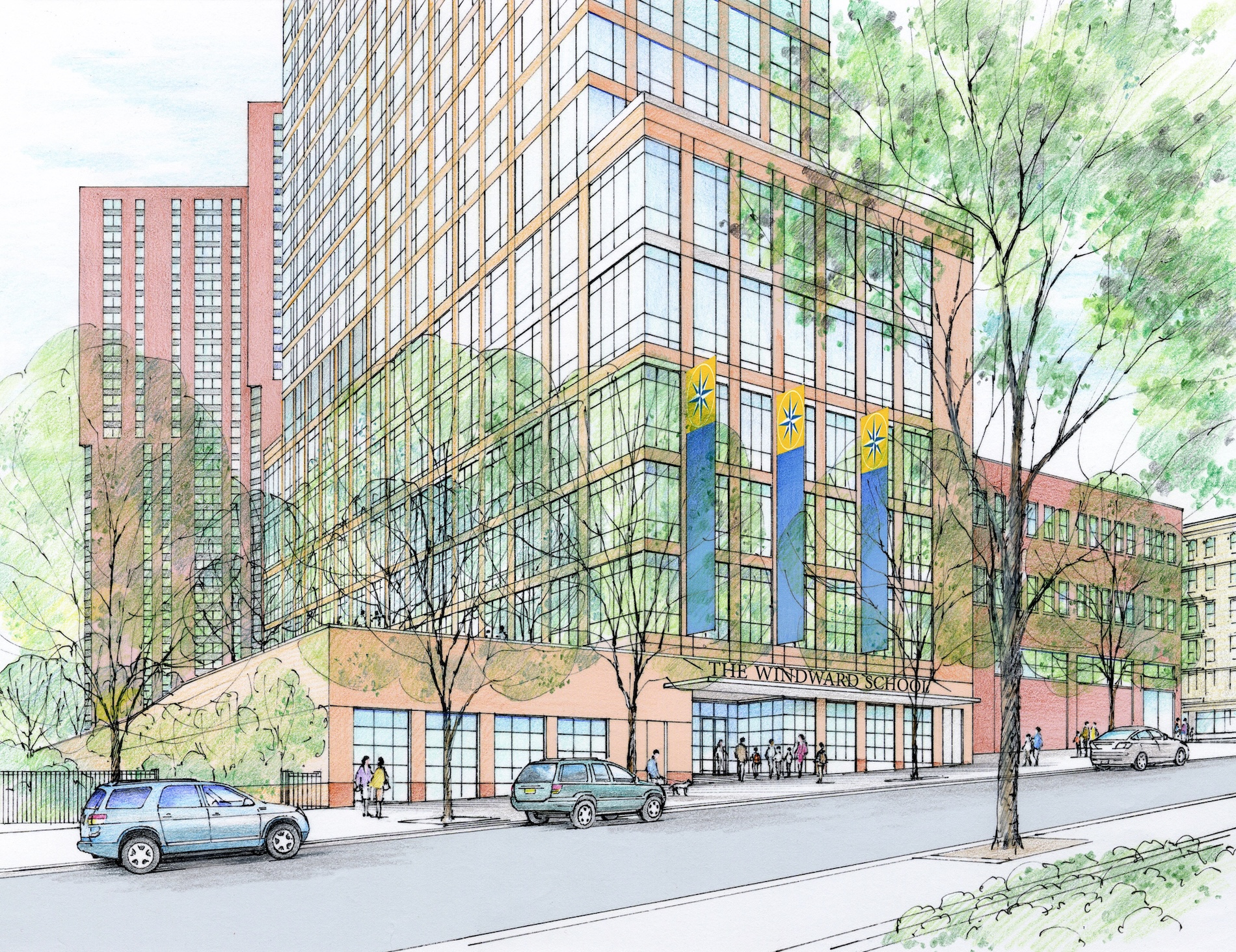
One school. This was the principle guiding years of planning that would enable The Windward School to open a campus in Manhattan. And there were many pieces—ideating, fundraising, hiring, training, building—to be arranged with meticulous care, always with the aim to preserve the fidelity of Windward’s program.
Realizing this vision necessitated a level of collaboration unparalleled in the School’s history, an almost obsessive attention to detail, and a willingness to take on what others had dismissed as impossible. Driven by the ambitious goal to double the number of students served by Windward’s program at the time, the School’s leadership team set to work. Throughout the process, they remained undeterred by the massive amount of capital to be raised, the labyrinth of logistical considerations, or even the longest winter freeze on record in New York City throwing a wrench in the construction timeline.
Ultimately, the story of how The Windward School opened a Manhattan Lower and Middle Schools campus is a testament to the School’s determination to move ever closer to its vision: a world where every child with a language-based learning disability is empowered to achieve unlimited success.
Articulating the Vision
Shortly after Dr. John Russell joined Windward as the head of school in 2006, it became clear that it was imperative to broaden the School’s capacity to serve more students. “One of the things that struck me and was repeated by virtually everybody,” Russell says, “was what a shame it was that we had to turn away so many kids who desperately needed another opportunity to learn and to be taught the way they needed to be taught—an opportunity that Windward provided to a limited number of kids.”
The need for Windward’s program was rapidly outpacing the number of seats available, with the admissions office routinely running wait lists. And for students who lived in New York City, New Jersey, and Long Island, the commute to Westchester was intense. Assistant Head of School for Enrollment Management Beth Foltman and Assistant Director of Admissions Tristes Dunn recall, “There was one student that used to bring a pillow on the bus, so he could take a nap during the 60-minute journey to school each day.”
Making the program more accessible by adding a campus to serve students in the metropolitan area was a natural step forward for Windward, one that for years was seen as not feasible. Russell notes, “The trustees had spoken with previous heads of school over the course of years, and the previous heads always felt that, no, we really can’t duplicate this program. It would lose the secret sauce.”
But Russell and the trustees—specifically, Michael Salzer and Devon Fredericks—kept returning to the idea that if the School could successfully expand, it would be able to offer its program to students who would otherwise struggle. “I used an analogy frequently talking about this,” Russell says. “We have penicillin that can prevent children from having a major illness, if we can just get the distribution right to help more kids.”
The primary question was, could Windward train teachers sufficiently enough to successfully run the program in a different location? Ensuring that the curriculum and its delivery was consistent across multiple campuses would be no small task; however, maintaining program integrity would be paramount for a successful expansion into Manhattan.
So, the trustees and administration began that exploratory journey together, bringing in Sandra Schwarz—then director of the Windward Teacher Training Institute, now director of faculty recruitment and special projects—to address particulars around hiring and training the necessary teachers. Schwarz remembers, “We used to put huge sheets on the walls to brainstorm everything we could think of, to the smallest detail, as a pre-mortem. The training piece was so important, and we knew we had to get it right.”
Growing the Teacher Training Institute
Staffing a new campus would require not only more teachers but also curriculum coordinators, staff developers, and dedicated spaces for training new faculty. In 2011, the Windward 2020: Share the Vision Capital Campaign launched, which included a campus in Manhattan and a home for the Windward Teacher Training Institute (WTTI) at Westchester Middle School (WMS). That same year, Schwarz started a multi-year recruitment effort to train additional teachers-in-residence. That way, the School could transition fully-trained teachers to the New York City campus without depleting the ranks of seasoned faculty in the Westchester campuses.
The Summer Intensive Program (SIP)—in-depth, collaborative work on different areas of curriculum and lesson planning—had previously been open by invitation only; Windward began to welcome first-year teachers to engage in this opportunity to grow their knowledge base. Because the system of mentorship between lead teachers and teachers-in-residence is fundamental to the implementation of the program, the leadership team knew that each campus would need a mix of veteran teachers and newer faculty. During planning, they regularly surveyed staff to ascertain who may be willing to work at the new campus.
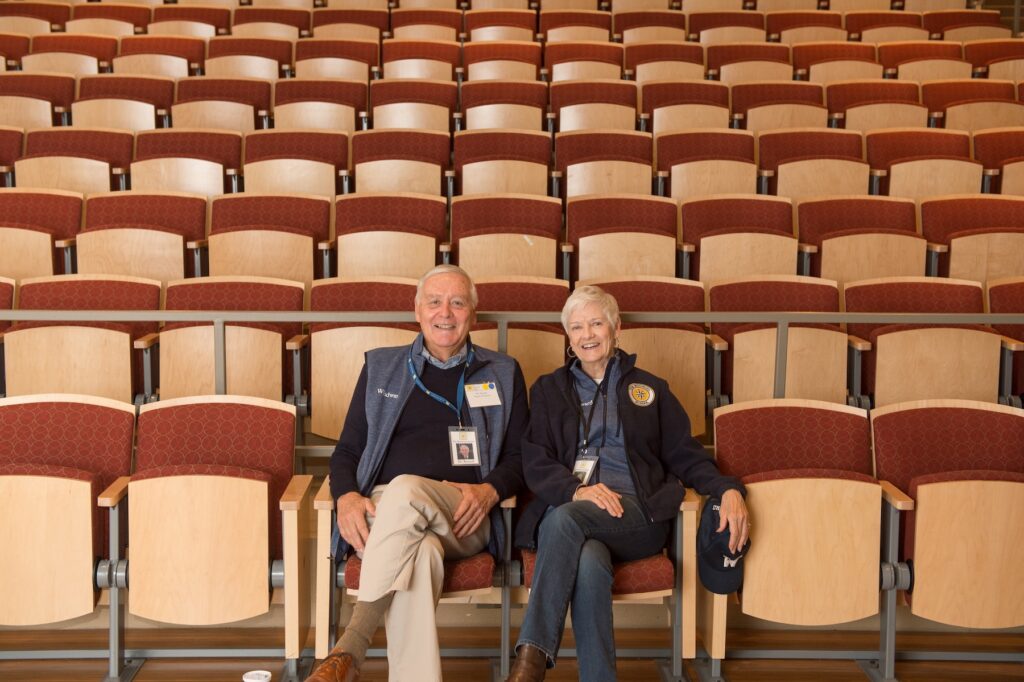
Building an annex at WMS to house teacher training spaces was critical to a successful expansion of the School; however, the process did not come without its hiccups. Salzer recalls feeling grateful for the expertise of fellow board member Joe Lorono, a well-known builder in Westchester. “We were getting ridiculously high quotes to tear down the old dormitory building at the middle school. Joe said he could bring his bulldozer and handle the demolition himself.” By 2012, the Judith C. Hochman Building at WMS had been completed, including a lecture hall, classroom space, administrative offices, and the state-of-the-art Maureen Sweeney Auditorium. (Sweeney led the admissions team for many years and, critically, throughout the transition to opening in New York City.)
The School was well on track to open in Manhattan in 2015.
The Pivot
Securing a permanent home for Windward in Manhattan was a painstaking endeavor with a number of false starts, but help came by way of Fredericks, who knew of a building in development by Related Companies. They were still seeking a tenant for one of the units. “That’s when a number of the other trustees jumped into the fray, particularly Tim Jones, who was a real estate developer,” says Russell. Salzer adds, “Without Tim, making the real estate deal could have been a nightmare. But it was just like another Thursday morning for him, so he knew what to do.” Jones negotiated with Related to ensure Windward would own the space, while Eric Schwartz, also a developer, stepped in to assist with the contract.
When the time came to blueprint the new space, Lou Switzer, an architect, was instrumental in helping design the layout of the building. Mark Goldberg had extensive experience as a builder, and he attended every construction meeting. Board treasurer Mark Ellman partnered with the head of Windward’s business office, Stephen Littell, to run hundreds of financial simulations. In tandem, the director of development at that time, Barb Drayer, ran scenarios outlining fundraising needs for the capital campaign. “It was a very special group of people that got behind this project and pushed it through,” Salzer says.
But even the best-laid plans run into the occasional roadblock, and this one was quite literal: a deep winter freeze that blocked construction vehicles from accessing the site. With construction stalled, it soon became obvious that the building would not be ready to open for the 2015-2016 school year. However, 107 students in grades 3–6 were already under contract to attend Windward in Manhattan, and delaying the opening was not an option. It was time to pivot. The School commenced the search for an alternative location for the first year of the Manhattan campus, and when it was discovered that a parochial school on West 97th Street had recently ceased operations, Russell and Jones entered into conversations with the Archdiocese of New York. They were able to secure a lease on the former school building, and work began in earnest to ready it for Windward students in the fall.
The OG Manhattan Crew
The School had already tapped the campus head at Westchester Lower School—Leslie Zuckerwise—to run Manhattan Lower and Middle Schools, and she turned out to be the ideal pick. Zuckerwise fostered a positive, collaborative spirit among Manhattan colleagues from the moment planning began. The year prior to the campus opening, she began encouraging partnership among staff members slated to teach in Manhattan. “Leslie was so intentional,” explains Manhattan Lower School Teacher Sarah Nordgren. “During professional development time on Fridays, she grouped us so that all the Manhattan people would be together, already laying the groundwork for what would become such a special bond among the group of people working there.”
Coordinator of Science Paul Lennihan fondly remembers outfitting their new classrooms with materials from a storage area on the fourth floor of the Upper West Side building. “We all went on a scavenger hunt,” he says, “just kind of combing through the space to find items we wanted to bring down to our classrooms, which were massive with these high ceilings and a lot of space to fill. There was just this can-do spirit and grittiness in making our program work in this interesting space.”
Coordinator of Language Arts Sarah Golden recalls, “It was just such a perfect example of true teamwork, because we were all working towards this goal of having this campus succeed and getting it off the ground.” Coordinator of Language Arts Danielle Ngo adds, “We learned to rely on each other to face each new challenge, whether that was finding furniture for our classrooms, putting together a temporary library space, or dealing with the ‘ghost’ in the basement bathrooms!”
Without exception, every faculty and staff member from that first year in New York City who was interviewed mentioned the unique sense of camaraderie on the campus, extending from faculty and staff to students and their families. “The energy was palpable,” says Coordinator of Language and Speech-Language Pathologist Nicole Berkowitz. “There was a real sense that whatever comes our way, we’ve got this. We’re going to support each other, and we’re going to laugh and cry together. I give credit to Leslie for fostering a culture of real trust and true collaboration. She demonstrated great care for all.”
Manhattan students and their families embraced the enthusiasm and positivity that surrounded the campus, as well. Administrative Assistant Laura Monardo shares, “There was so much excitement about the School opening in the city. And the group of families that first year left such a lasting impression, because they were in it with us, helping build this new community.” Associate Director of Math Victoria Scarinci adds, “It was a small group of students. They were so close, with each other and with the teachers. There was a sense of belonging, ownership, and pride amongst students and teachers alike.”
Building Community
Often the process of opening a new campus can be bumpy, but Windward benefited from a solid framework that had been built in Westchester, which extended to programs such as drama, sports, and extracurricular activities. Coordinator of Activities Elly Steiker-Pearl notes, “Mentors would visit from Westchester to ensure fidelity of the program. There was an intentional focus on making sure the most important parts of the program stayed consistent, while allowing Manhattan to have its own feel. [Former Performing Arts Chairperson] Betsy Hooper was coming to New York City on a regular basis. And I was able to visit Westchester campuses to see drama productions there, as something to aspire to as I built the program.”
Athletic Director Dan Smith and Director of Health, PE, and Athletics Marilyn Hunt knew that establishing an athletic program in Manhattan would require some ingenuity and outreach; the goal was to mirror the Westchester program as closely as possible while taking advantage of what the city had to offer. Athletic facilities such as the John McEnroe Tennis Academy and Asphalt Green, for example, were easily accessible. “There was a thriving program in the city,” Hunt explains. “We knew that from visiting other schools and meeting with athletic directors. It was exciting to see that there were programs similar to ours, to support our students’ needs, and that we could soon become part of the Manhattan Athletic leagues.”
Adds Smith, “Marilyn’s idea, which I thought was genius, was to design the sports offerings as intramural programs first, in order to gauge interest.” Within three years, Smith was able to start an interscholastic program, with Windward competing against other schools. “There was a lot of trial and error,” he says. “It was a process, but it was fun.”
Impact
One unexpected benefit of combining elementary and middle grades in Manhattan was the fluid communication among lower school and middle school teachers. Associate Director of Language Arts Colleen McGlynn explains, “Having all those grades in one building really helped with vertical alignment of the program. With everyone under the same roof, it helped make processes more universal, and it eased transitions from grade to grade.” Coordinator of Special Services Rachel Leone agrees: “There was this built-in awareness among faculty members, too. To know where your students have come from, what their struggles are, and what their needs are, and then also have the foresight to know what you have to prepare them for, it’s priceless. And it’s such an integral part of being a teacher.”
Open communication among all faculty and staff may have been a natural outcome of combining lower and middle schools at Manhattan’s campus, but it was also a key factor in the successful implementation of Windward’s program there. “[Everyone went] above and beyond to do their job and do it well,” says Zuckerwise. “There was a lot of joy and laughter, but at the same time, we all took this charge incredibly seriously, because we were delivering this very important education to these kids. At the end of the day, we’d smile amid the challenges and just know we’d done some good.”
The Manhattan campus of the School is now a well-known fixture in New York City, “having gone from a little school in Westchester doing amazing things to establishing a real foothold in the city,” explains Associate Head of School Jonathan Rosenshine. Head of School Jamie Williamson notes, “That has had a massive impact on the reputation and awareness of the world of Windward.” And with this awareness comes opportunities for even more students to benefit from the School’s programs, all born from the kernel of an idea that grew, until the notion that Windward couldn’t possibly open in New York City was replaced with the certainty that it would.
In the years since the Manhattan campus opened, it has grown in numbers and seen its community flourish. “Windward has for decades brought students together for one very specific mission, and the realization of a campus in the city has meant that we are able to serve more students and families while remaining committed to that mission,” says Campus Head of Manhattan Lower and Middle Schools Dr. Jason Mott. “Our reach into all five boroughs, New Jersey, and sometimes wider brings together a range of perspectives, experiences, and personalities that result in a dynamic community that mirrors the energy of the city. I feel that energy each day, and it motivates us all, faculty and staff alike, to make a positive impact on the lives of our students and families.”
Campus Head of Westchester Lower School Dr. Daniele Kass, who led Manhattan’s campus following Zuckerwise’s retirement, adds, “As Manhattan’s campus head, I saw the campus not only grow but also develop its own distinct character—absolutely Windward at its core, yet with a special flavor that reflects the vibrancy, diversity, and determination of the city.”
Certainly, more than a decade ago, the School’s leadership team leaned in with that signature New York tenacity, doggedly committing to an audacious goal that ultimately led to Windward’s successful expansion into Manhattan. One vivid memory shared by Steiker-Pearl perfectly illustrates how important it was to broaden access to the program: “On my first day at Windward on the Upper West Side campus, I was standing outside at arrivals. I noticed a man standing by the door, but he hadn’t arrived with any children. So, we were keeping an eye on him. Eventually, Jeremy [Bletterman, former assistant division head of Manhattan] approached him and asked, ‘Can I help you?’ The man asked if this school was part of The Windward School in Westchester. Jeremy answered yes, and the man said, ‘That school changed my life.’”