



Reading is one of the most complex skills a child will develop, and for most, it unfolds gradually with effective instruction and practice. But for some children, the process feels persistently and inexplicably hard, and that difficulty has a name.
Dyslexia is a neurobiological learning disability that affects how the brain processes the sounds of spoken language, making it challenging to connect those sounds to printed words. It is the most common learning disability, estimated to affect 15 to 20 percent of the population, which means that statistically, in a typical classroom, two to four students are likely affected.
Dyslexia is also highly heritable. Research shows that a child with a parent or sibling with dyslexia has roughly a 45 percent chance of having it as well, which makes family history one of the most important early indicators a parent can consider. Equally important is timing, with studies suggesting that signs of reading risk can be detected as early as age three—well before formal reading instruction begins—and that early intervention matters.
What Dyslexia Is Not
Before turning to signs, it is worth highlighting some common misconceptions about dyslexia. For example, it is not a reflection of intelligence, effort, or motivation. Many students with dyslexia are highly capable, creative thinkers who work harder than their peers to accomplish the same reading tasks, often without recognition for that effort. Dyslexia is also not something a child will simply outgrow. It is important to note that language-based disabilities are pervasive and are present for the life of the individual, and without targeted, evidence-based instruction, reading difficulties tend to persist and widen over time.
Signs to Watch For
Dyslexia exists on a continuum; no two students present identically, and the degree of difficulty can vary across reading, spelling, writing, and fluency. That said, signs tend to emerge in recognizable patterns across developmental stages.
In the Preschool Years
Early indicators can appear long before a child encounters a single printed word. Parents might notice:
- A delay in beginning to talk
- Difficulty rhyming words or recognizing rhymes in songs and books
- Trouble learning and remembering the names of letters
- Challenges following multi-step directions
- A family history of reading or spelling difficulties
In Kindergarten
As children begin formal literacy instruction, phonological awareness—the ability to hear and manipulate the sounds of spoken language—becomes a critical skill. Watch for:
- Difficulty connecting letters to their corresponding sounds
- Trouble blending individual sounds together to form a word
- Challenges separating sounds within a word
- Slow progress learning to read simple, familiar words
- Difficulty with handwriting
- Frustration around books, or reluctance to engage with reading activities
In First Grade and Beyond
As reading demands increase, signs may become more visible:
- Persistent difficulty with spelling, even common words
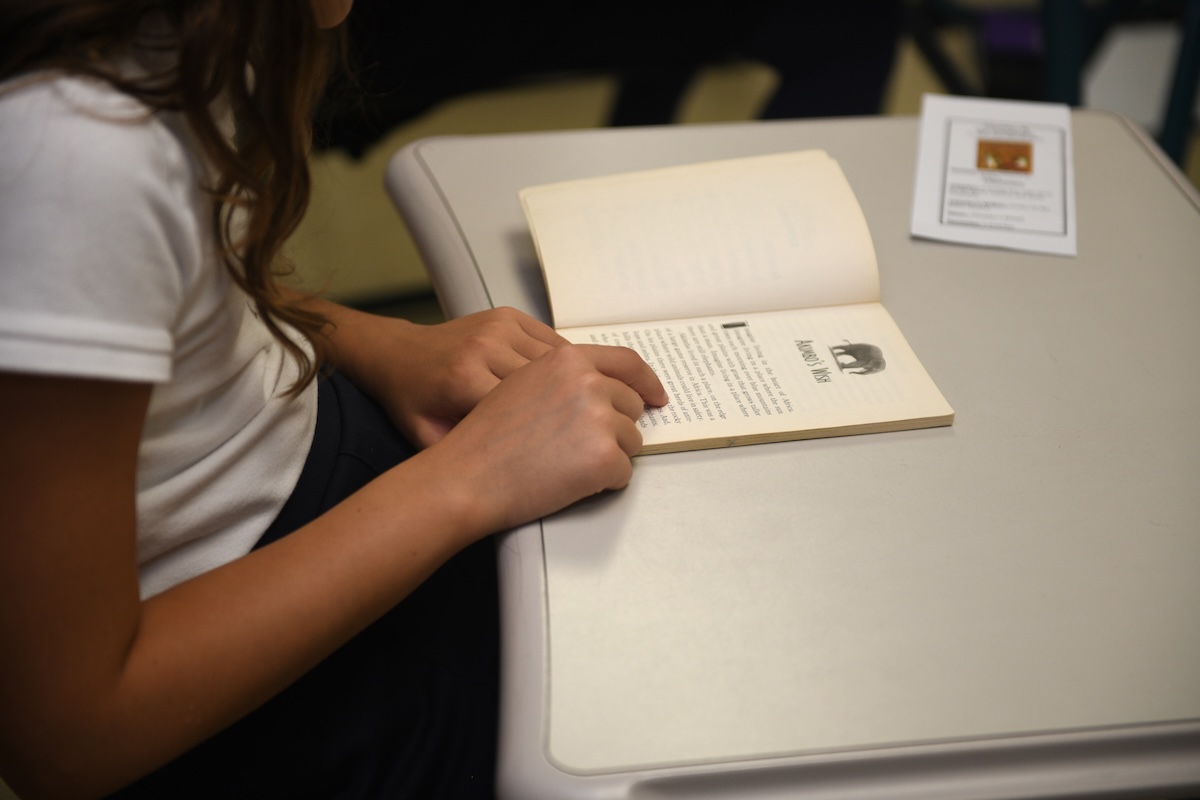
- Slow, effortful reading of simple or one-syllable words
- Reading that lacks fluency or expression
- Avoidance of reading aloud or independently
- Difficulty taking notes, organizing written work, or putting thoughts on paper
- A noticeable gap between what a child can express verbally and what they can produce in writing
The Importance of Early Identification
The timing of identification matters enormously. Research consistently shows that intervention is most effective when it begins early, before reading difficulties compound and before a child begins to internalize the experience of struggling. When students go unidentified for too long, the academic gaps widen, and these gaps have a significant emotional impact. Students who struggle without explanation often describe feeling frustrated, embarrassed, or simply not smart, even when their abilities tell a different story.
A comprehensive evaluation by a qualified specialist can clarify what a child is experiencing and open the door to appropriate support. If several of the signs above feel familiar, that is reason enough to seek an evaluation.
What Parents Can Do
Start by talking with your child’s teacher about what you are observing at home. Request a referral for a psychoeducational evaluation if concerns persist. And know that a diagnosis, if it comes, is not a ceiling; it is a starting point to putting your child on the path to gaining the tools they need to succeed. Evidence-based programs like those used at The Windward School have helped thousands of students gain the academic proficiency and confidence to realize their unlimited potential.
With early identification and structured, evidence-based instruction, students with dyslexia can develop into skilled and confident readers. At Windward, early identification is understood as foundational to everything that follows; the sooner a child receives the right support, the more ground there is to build on. However, remediation can be effective at any age. If your child is struggling, help is available.

References
International Dyslexia Association. (2002). Definition of dyslexia. https://dyslexiaida.org/definition-of-dyslexia/
Puolakanaho, A., Ahonen, T., Aro, M., Eklund, K., Leppänen, P. H. T., Poikkeus, A.-M., Tolvanen, A., Torppa, M., & Lyytinen, H. (2007). Very early phonological and language skills: Estimating individual risk of reading disability. Journal of Child Psychology and Psychiatry, 48(9), 923–931. https://doi.org/10.1111/j.1469-7610.2007.01763.x
Snowling, M. J., & Hulme, C. (2024). Dyslexia: A dimensional approach to diagnosis and intervention. Journal of Child Psychology and Psychiatry. https://doi.org/10.1111/jcpp.13650
Snowling, M. J., & Melby-Lervåg, M. (2016). Oral language deficits in familial dyslexia: A meta-analysis and review. Psychological Bulletin, 142(5), 498–545. https://doi.org/10.1037/bul0000037