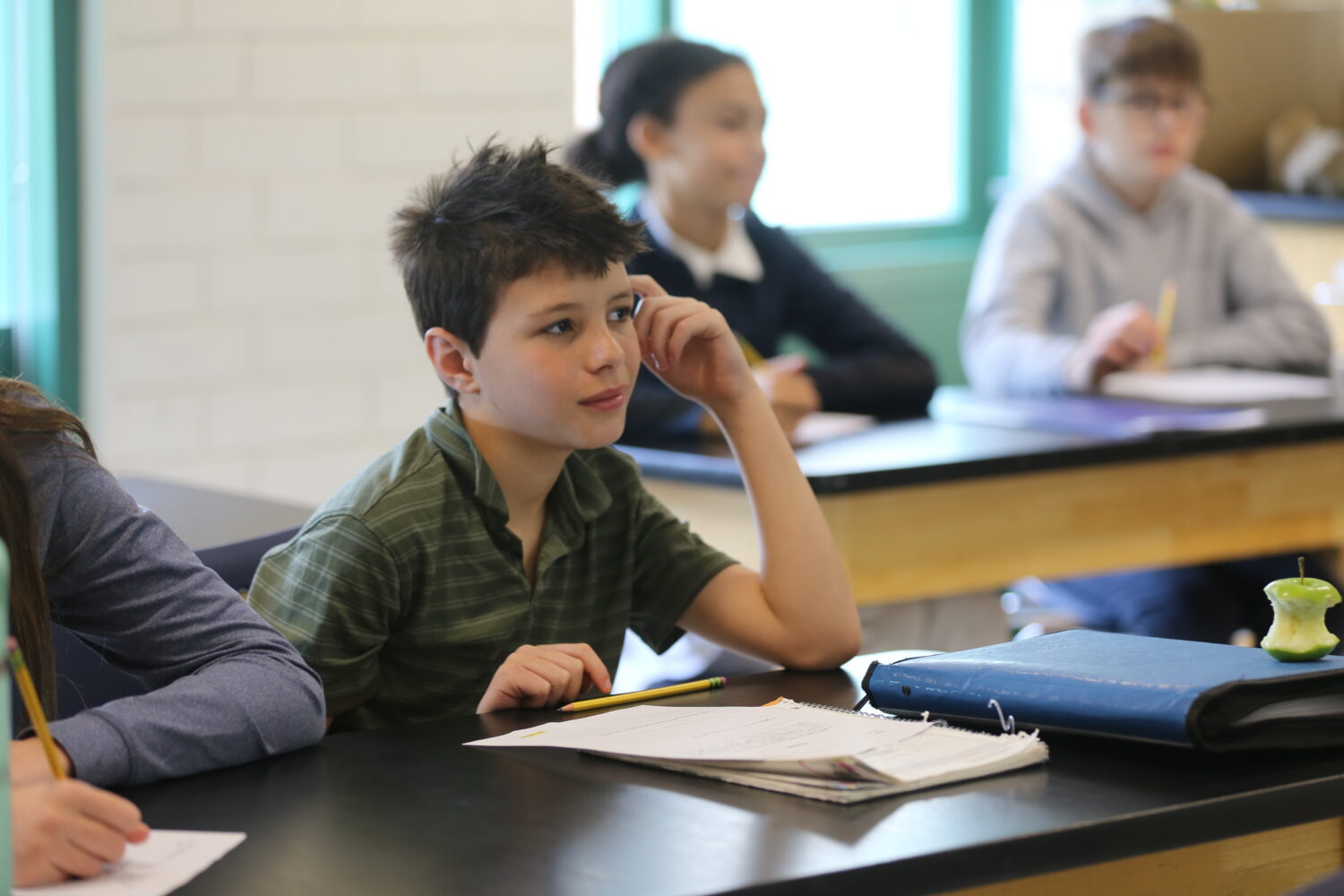



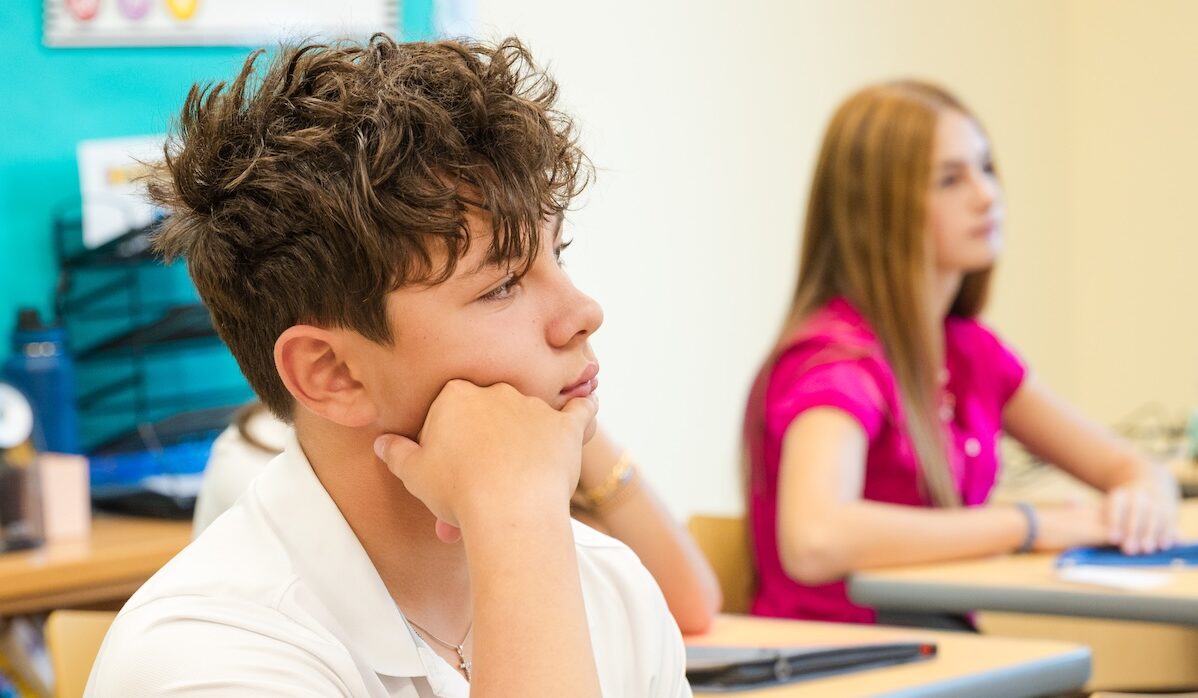
Three minutes into a morning lesson, a teacher asks an open-ended question. Instantly, twenty-eight pairs of eyes avoid the teacher. In the corner, one student stares out the window; across the room, another doodles quietly. A single eager hand shoots up, while whispers, glances, and yawns ripple through the classroom. The moment the question is answered, the discussion narrows into a quiet exchange between the teacher and one or two confident voices.
This phenomenon is not due to failure in teaching or planning but stems from what is known as the Participation Gap. Research shows that in many classrooms, up to 80% of the talking is done by only 20% of students (Goodwin, 2014). After an average wait time of three to four seconds, the same few voices usually break the silence, while others stay quiet, making the participation gap immediately clear.
Adding to this gap, the Initiation, Response, Evaluation (I-R-E) discourse pattern remains dominant across classrooms and schools, limiting higher-level thinking, constructive dialogue, and deep learning. The I-R-E cycle is a three-part exchange:
Initiation (Teacher): The teacher asks a question, usually one with a specific “right” answer.
Response (Student): A student provides an answer.
Evaluation (Teacher): The teacher confirms or corrects the student’s answer.
As Cazden (1998) describes, it is the most common sequence and leads to teacher-centric discourse and passive learning that doesn’t engage students, as most I-R-E questions focus on recall rather than critical thinking. However, traditional lesson structures can be adapted to foster more meaningful discussions through changes in speaking rights, teacher roles, and cultural responsiveness.
A powerful alternative—documented by Nystrand (1997)—is rich classroom discussion in which students can explore open-ended queries, build on one another’s contributions, and make connections among ideas and concepts. Deliberate, structured student-led discussions promote the development of critical thinking, and they should be part of every classrooms.
Dialogic Teaching
Dialogic teaching is the art of using conversation to stimulate thinking and deepen understanding. Instead of the traditional I-R-E model, it treats the classroom as a collaborative space where discussion is the primary tool for learning. It moves beyond simple “question and answer” sessions into something more intellectually rigorous (see Alexander, 2018). At the heart of dialogic teaching are clear norms that guide how students interact: for example, building on each other’s ideas, challenging reasoning respectfully, and justifying their thinking with evidence. Previewing these key norms early helps set expectations and distinguishes dialogic talk from simple Q-and-A, creating a clear foundation that later discussion routines will reinforce.
Classroom discussion is a high-impact instructional strategy, with an effect size of 0.82, more than twice that of homework and significantly higher than common practices such as worksheet exercises, which typically yield smaller gains (Hattie, 2023). This occurs because student discourse fosters deeper learning. Students integrate new information with prior knowledge, resolve misconceptions, rehearse and refine their ideas, and transform abstract concepts into concrete understanding. Discussion also serves as an effective formative assessment by rendering student thinking visible.
Discussion is not a break from learning but constitutes cognitive work. Verbalizing ideas facilitates the transfer of information from transient working memory to long-term memory. Without such engagement, much of the instruction is lost before the end of the lesson.
Using Dialogic Teaching to Promote Inclusive Classrooms
In Culturally Responsive Teaching, Zaretta Hammond (2014) cites research that emphasizes the neurobiological necessity of social interaction for learning. Low-stakes discussions remove the spotlight from individual responses and create a sense of safety for learners. This, in turn, enables students, including those with language-based learning differences, multilingual learners, and students who tend toward introversion, to maintain a ‘ready-to-learn’ state.
Consequently, as noted by Parker-Shandal (2023), providing all students with equal opportunities to participate in discussions promotes equitable learning outcomes. This is particularly critical for groups frequently marginalized in classroom discourse and students furthest from opportunity. Traditional classroom discourse often privileges those familiar with unspoken participation norms, typically students from dominant socio-economic groups.
Shifting toward classrooms where every student’s voice is intellectually valued fosters a more inclusive and effective classroom environment for all. Dialogic teaching addresses this by making expectations for classroom discourse explicit and by facilitating inclusive dialogue, ensuring all students can engage meaningfully and equitably in classroom discussions. The Education Endowment Foundation (2017) in the United Kingdom conducted a large-scale trial involving over 5,000 students. The study found that dialogic teaching produced the most significant positive impact on students furthest from opportunity due to potentially limited exposure to “academic talk” at home; the structured and supportive classroom dialogue functions as a powerful equalizer, enhancing performance in English, science, and mathematics concurrently.
Discussion Routines for Every Subject
Classroom discussions require careful planning by the teacher and must be practiced and learned over time by students. When planning, teachers will want to consider the learning objectives of the lesson and the types of questions, prompts, teacher moves, and activities that will be the most supportive.
Teacher Moves to Support Purposeful Discussions (Michaels et al, 2010)
Define Academic Purpose: Identify the “big ideas” and key concepts students need to grapple with to ensure lesson coherence.
Select High-Demand Tasks: Design tasks with high “cognitive demand” that require intensive thinking and provide multiple entry points for all students.
Anticipate Thinking: Forecast likely student theories or misconceptions and plan how to link everyday language to academic terms.
Match Talk Formats: Choose structures, such as whole group, partner talk, or student presentations, based on learning goal.
Troubleshoot: Prepare for possible answers, ensure equitable participation, and use “wait time” to deepen reasoning.
Structure for Coherence: Ensure a clear lesson flow with a task introduction, time for exploration, and a final recap to synthesize new understandings
Activities that Build Discussion Skills and Routines
1. Think–Pair–Share
To help students organize their thoughts and lower the pressure of speaking, start with a one-minute individual write. Then, move into a two-minute partner share, giving both students structured time to exchange and build on their ideas before opening up to the class. This pacing cue offers enough time for writing and sharing, ensuring all voices are included.
For students learning a new language or those who struggle with social anxiety, the Pair step acts as a rehearsal. It builds the confidence needed to speak up in front of the larger group.
2. Jigsaw
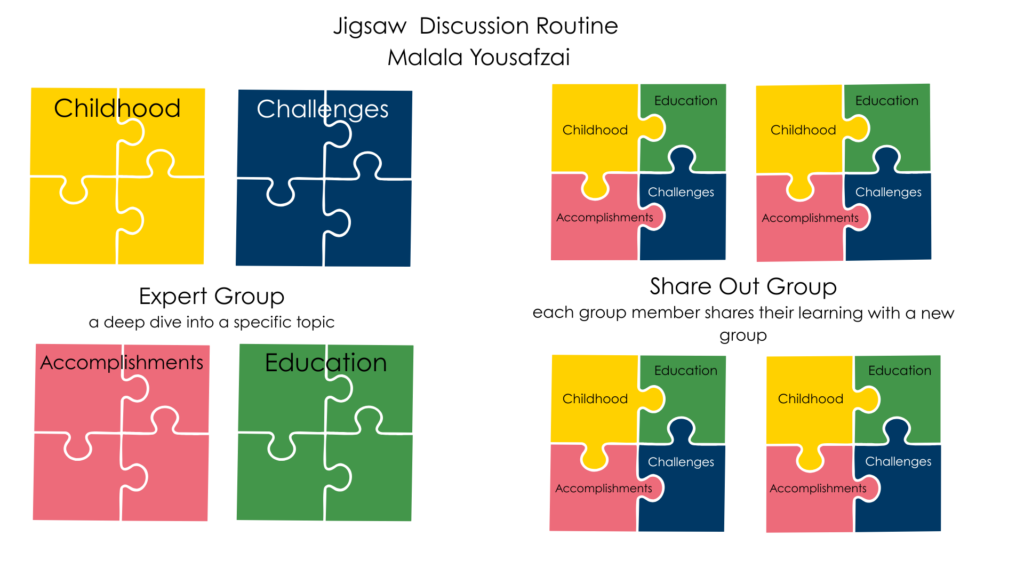
The jigsaw teaching method fosters academic and social growth by making students both learners and teachers. In small groups, each member becomes an “expert” on a specific part of a topic and then shares their knowledge, enabling everyone to assemble the complete lesson. This approach encourages active participation, mutual support, deeper understanding, and strong social skills while minimizing competition.
3. Silent Discussion
Place large sheets with prompts around the room. Students rotate, respond, and build on each other’s ideas in writing. This setup helps maintain a flow of written conversation while leveling the playing field for all learners.
From Teacher-Led to Student-Owned
The goal of discussion routines is simple: shift the teacher into the role of a supportive scaffold rather than the center of attention. While students take the lead, the teacher remains actively engaged by quietly tracking patterns of voice, monitoring levels of participation, and offering strategic prompts when necessary. Teacher scaffolds are essential in dialogic teaching: Educators model effective ways to contribute, pose open-ended questions, and provide guided practice through structured activities. These supports help students build confidence and develop the skills needed to participate thoughtfully and equitably.
In a thriving classroom, the conversation shifts from a teacher-student exchange to a dynamic dialogue among students. Discussion is not a detour from the curriculum but constitutes its core. When grounded in equity-promoting routines, it transforms factual knowledge into critical thinking and supports the development of skills and intellectual courage. To master academic standards and achieve genuine learning, students must actively speak and engage.
References
Alexander, R. (2018). Developing dialogic teaching: Genesis, process, trial. Research Papers in Education, 33(5), 561–598. https://doi.org/10.1080/02671522.2018.1481140
Cazden, C. B. (1988). Classroom discourse: The language of teaching and learning. Heinemann.
Goodwin, A. P., Cho, S.-J., Reynolds, D., Nunn, S., & Silverman, R. (2020). Explorations of classroom talk and links to reading achievement in upper elementary classrooms. 2020 Faculty Bibliography. https://collected.jcu.edu/fac_bib_2020/6
Hammond, Z. L. (2014). Culturally responsive teaching and the brain: Promoting authentic engagement and rigor among culturally and linguistically diverse students. Corwin.
Hattie, J. (2023). Visible learning for teachers: Maximizing impact on learning. Routledge.
Jay, T., Willis, B., Thomas, P., Taylor, R., Moore, N., Burnett, C., Merchant, G., & Stevens, A. (2017). Dialogic teaching: Evaluation report and executive summary. Education Endowment Foundation.
Michaels, S., O’Connor, M. C., & Hall, M. W. (2010). Accountable Talk® sourcebook: For classroom conversation that works. University of Pittsburgh.
Nystrand, M. (1997). Dialogic instruction: When recitation becomes conversation. In M. Nystrand, A. Gamoran, R. Kachur, & C. Prendergast (Eds.), Opening dialogue: Understanding the dynamics of language and learning in the English classroom (pp. 1–29). Teachers College Press.
Parker-Shandal, C. (2023). Participation in higher education classroom discussions: How students’ identities influence perspective taking and engagement. Teaching and Learning Inquiry, 11. https://doi.org/10.20343/teachlearninqu.11.19